
What Growth Actually Means When You’re Buying (or Selling) Here
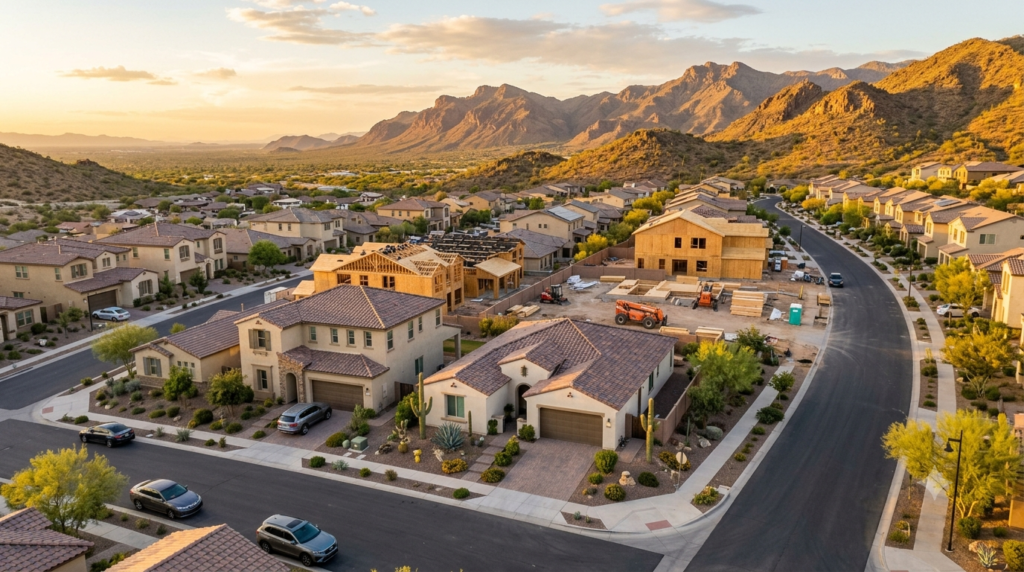
Every few months someone asks me the same question a different way: “Is this area going to keep growing, or has it already peaked?” It’s the right question. It’s just usually aimed at the wrong thing.
Why Phoenix Growth and Development Matters to Your Timing
Phoenix growth and development doesn’t happen evenly across the Valley. Some areas are adding rooftops and retail every year, while others have been fully built out for a decade. That difference matters more than most buyers and sellers realize.
If you’re buying, growth nearby can mean more amenities are coming, but it can also mean more traffic and construction noise in the short term. If you’re selling, being in a high-growth area can work in your favor, especially if new schools, roads, or commercial centers are planned close by.
The key is knowing where an area sits in that cycle before you make a decision. A neighborhood in the middle of a growth wave feels very different than one that’s already settled. Neither is automatically better; they’re just different stages, and each one comes with its own trade-offs worth understanding before you buy or sell.
People tend to picture growth as one story — new houses going up, more people moving in, home values climbing. Sometimes that’s it. But growth shows up in a handful of different ways, and each one hits your situation differently depending on whether you’re buying, selling, or just trying to figure out if you’ll still like your neighborhood in five years.
The kind of growth that raises your value
New rooftops nearby, especially higher-end ones, usually pull comps up. If you’re selling, this is the good version — it can mean more buyer interest and a stronger appraisal. If you’re buying into an area early in this cycle, it can mean you got in before the area “arrived.”
The kind that changes your daily life first, your equity second
New retail, restaurants, and employers moving into an area often show up before the value bump does. This is the “it finally feels like a real neighborhood” phase — more reasons to stay local, shorter drives for errands. Worth asking about for lifestyle reasons even if you’re not thinking about resale yet.
The kind that’s mostly noise, at least for now
Approved zoning, an announced project, a “coming soon” sign — these get talked about like they’re already real. Sometimes they take years. Sometimes they change shape entirely before groundbreaking. I wouldn’t buy or pass on a house based on something that’s only been announced. Ask what’s actually under construction versus what’s still on paper.
The kind that can work against you
More growth usually means more traffic on the roads you already drive, more competition for the same schools and amenities, and — depending on what’s being built — sometimes changes to the character that made the area appealing in the first place. This isn’t a reason to avoid a growing area. It’s a reason to ask specific questions: What’s the traffic pattern going to look like in three years? Is the new development compatible with how the area feels now, or a departure from it?
What I’d actually ask before you decide
- What’s under construction right now within a mile or two — not just approved, actually being built?
- Is the growth residential, commercial, or both — and does that match what you want nearby?
- Has anything in the pipeline changed the school boundaries or is that even a possibility?
- If you’re selling: is now, before or after a nearby project completes, the better window?
Growth isn’t automatically good or bad for you. It depends on what’s actually happening, on what timeline, and whether it lines up with what you’re trying to do. If you want to talk through what’s happening in a specific area you’re watching, that’s exactly the kind of conversation worth having before you make an offer — not after. Contact Deb